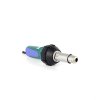
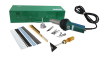
What Is a Spark Tester? A Complete Guide to Leak Detection (PST-100 vs eRex vs eRaptor)
What Is a Spark Tester?
A spark tester is a device used to detect pinholes or defects in non-conductive materials such as:
HDPE
PVC
TPO membranes
Protective coatings on steel
How it works
The device applies electrical voltage across the surface. If there is a defect, the current jumps (spark) to the grounded substrate, indicating a leak.
When Should You Use a Spark Tester?
Spark testing is recommended for:
Roof leak detection
Waterproofing systems
Geomembrane installations (landfills, ponds)
Tank and pipeline coatings
Use it when:
You need 100% waterproof assurance
Quality control (QA/QC) is required
You want to detect invisible pinholes before failure occurs
Types of Spark Testers
1. High Voltage Spark Tester (PST-100)
Best for heavy-duty industrial applications.
Use cases:
Thick coatings
Steel tanks
Pipelines
Pros:
High voltage for thick materials
Industry-standard for coating inspection
Cons:
Requires power source
Needs trained operator
2. Portable Arc Tester (eRex)
A lightweight, battery-powered solution for field inspections.
Use cases:
Roofing membranes
Waterproofing
Maintenance and repair
Pros:
Easy to use
Portable and lightweight
Audible/visual alarms
Cons:
Limited thickness range
3. Large Area Arc Tester (eRaptor)
Designed for large-scale inspections.
Use cases:
Landfills
Mining projects
Large geomembrane areas
Pros:
High-speed scanning
Covers large areas quickly
Data logging and reporting
Cons:
Higher investment cost
Best suited for large projects
How to Choose the Right Spark Tester
Choose based on your application:
Industrial coating / thick materials → PST-100
Roofing / waterproofing / general inspection → eRex
Large-scale projects / geomembrane fields → eRaptor
Pro Tip: Use Multiple Methods
Professionals often combine methods:
Air pressure test for seams
Spark testing for full surface inspection
This ensures maximum reliability and quality assurance.
Final Thoughts
A spark tester is one of the most efficient tools for leak detection in modern construction and industrial applications.
Choosing the right model can significantly improve inspection speed, accuracy, and project confidence.